Beyond the Basics: Understanding ANSI & EN 388 Ratings in Coated Work Gloves
Selecting hand protection for industrial operations often comes down to deciphering safety ratings printed right on the glove cuff. While features like high-grip coatings draw immediate attention, safety standards tell the real story of how a glove will perform under severe mechanical stress.
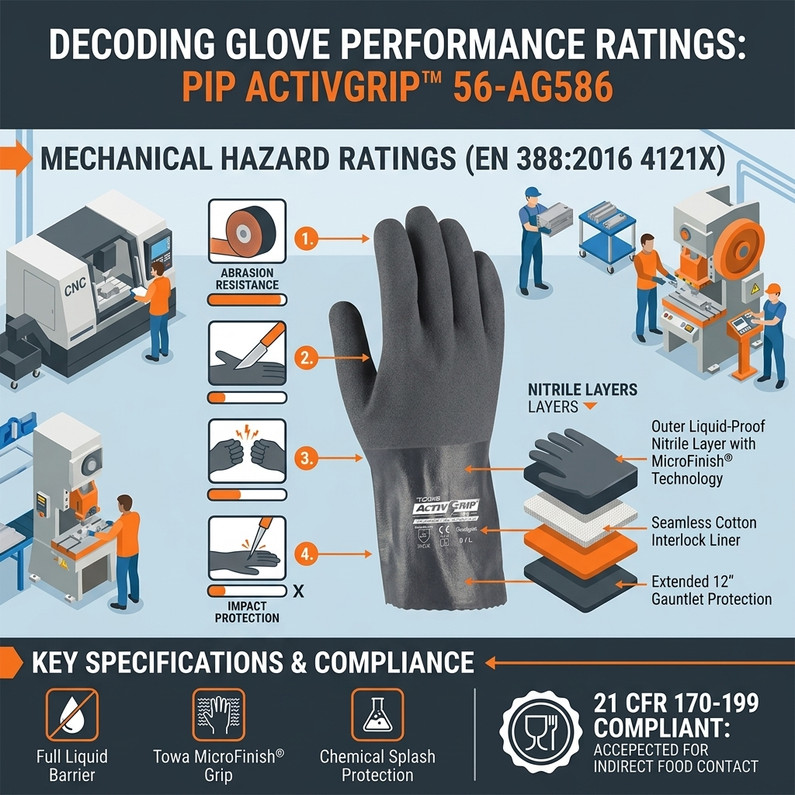
The PIP ActivGrip™ 56-AG586 provides a clear example of how structural design aligns with formal testing standards. Rated under EN 388:2016 (4121X) and ANSI/ISEA criteria, its performance profile highlights why specific ratings matter on the shop floor.
Decoding the EN 388 Mechanical Standards
European Standard EN 388 tests gloves across four core mechanical hazards. Understanding these numerical ratings ensures equipment matches the specific risk level of the job:
┌─────────────────────────────────────────────────────────────┐
│                 EN 388 (4121X) RATING BREAKDOWN             │
├──────────────────────────┬──────────────┬───────────────────┤
│ Hazard Test              │ Score Achieved│ Performance Level │
├──────────────────────────┼──────────────┼───────────────────┤
│ Abrasion Resistance      │   Level 4    │ Maximum Protection│
│ Cut Resistance (Coupe)   │   Level 1    │ Light Duty        │
│ Tear Resistance          │   Level 2    │ Moderate Duty     │
│ Puncture Resistance      │   Level 1    │ Light Duty        │
└──────────────────────────┴──────────────┴───────────────────┘
-
Abrasion Resistance (Level 4): Achieving the highest possible score means the outer nitrile coating withstands thousands of continuous cycles against abrasive materials before wearing through.
-
Tear & Puncture Resistance (Levels 2 & 1): Delivers baseline mechanical strength against snags, rough metal burrs, and minor punctures while preserving high tactile flexibility.
Why 21 CFR 170-199 Compliance Matters
Beyond mechanical scores, the PIP 56-AG586 meets 21 CFR 170-199 compliance. This federal standard certifies that the materials used in the glove are accepted for indirect food contact and handling.
For facilities operating across agricultural processing, food packing, or agrochemical handling, this compliance guarantees that the nitrile material will not leach unwanted compounds into products during handling.
Matching Glove Ratings to Facility Tasks
| Industrial Environment | Primary Hazard | Key Specification to Look For |
| Metal Stamping & Casting | Continuous surface friction and sharp edges | Level 4 Abrasion Rating for extended service life. |
| Wet / Oily Machine Tooling | Part slippage and liquid exposure | Full nitrile barrier with MicroFinish® suction technology. |
| Chemical & Liquid Splash | Forearm fluid runoff and contamination | Extended 12-inch gauntlet cuff protection. |
Making Informed Safety Choices
Matching hand protection to real-world tasks requires looking beyond simple comfort. By evaluating verified abrasion scores and regulatory compliance alongside specialized grip technology, safety managers can ensure their workforce stays protected against exact workplace hazards.
Recent Posts
-

Protection Meets Practicality: Forge FR P-MFRP-5 Brown Canvas Work Pants
When working in environments with flame and arc hazards, having safety gear that is both certified a …21st Oct 2026 -
Stanco FRC1512 vs. Forge FR MFRJ-104: Which FR Stretch Jeans Belong on Your Crew?
Choosing the right flame-resistant (FR) work jeans for your crew comes down to balancing arc flash p …21st Oct 2026 -
Why Electricians and Line Workers Are Switching to Stanco™ FRC1512 Memory Stretch Jeans
For electricians, utility technicians, and linemen, mobility isn't just about comfort—it's a fundame …16th Oct 2026