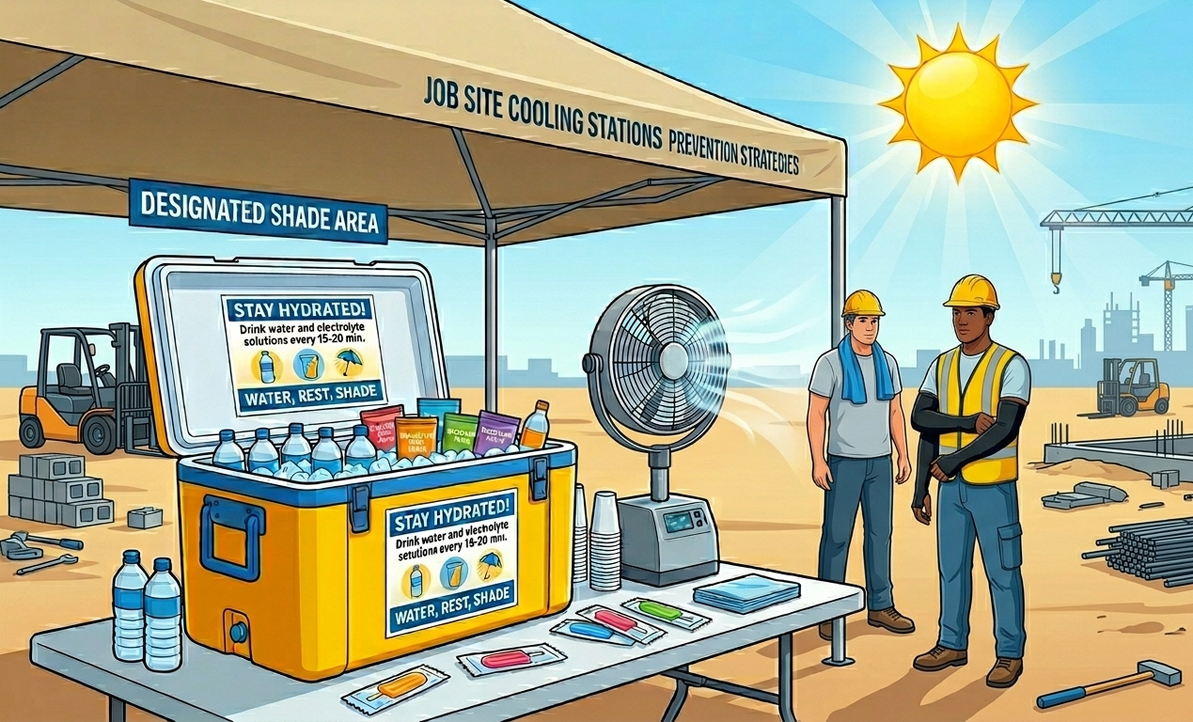
Beat the Heat: Essential Job Site Heat Illness Prevention Strategies
As the summer heat kicks into high gear this June, field crews, construction workers, and warehouse teams face one of the most dangerous seasonal hazards in the industry: heat stress.
When temperatures climb, heat-related illnesses like heat exhaustion and heat stroke aren’t just comfort issues—they are critical safety and compliance risks. As a safety manager or business owner, proactive job site conditioning is your best line of defense.
Here is a breakdown of the essential strategies and professional gear you need to deploy right now to protect your crew.
1. Establish a "Water, Rest, Shade" Routine
OSHA’s golden rule for heat illness prevention is simple but highly effective: Water. Rest. Shade.
-
Hydration: Workers should be drinking small amounts of water or electrolyte-replacing beverages frequently throughout their shift—ideally every 15 to 20 minutes—rather than waiting until they feel thirsty.
-
Scheduled Breaks: Implement mandatory rest breaks in designated, fully shaded or climate-controlled areas to allow workers' core bodies to cool down.
-
Acclimatization: If you have new workers or team members returning from a prolonged absence, gradually increase their workload over a 7-to-14-day period so their bodies can adapt to the high heat.
2. Move Beyond Plain Water with Advanced Electrolytes
While water is crucial, heavy sweating strips the human body of essential minerals like sodium, potassium, and magnesium. Relying solely on water during an intense, high-heat shift can lead to cramping and severe fatigue.
Setting up dedicated job site Hydration Stations stocked with professional-grade electrolyte solutions—such as Sqwincher Qwik Sticks or freezer pops—helps rapidly replenish what your workers lose in sweat. It keeps their energy levels stable, mental focus sharp, and bodies fully functional.
3. Equip Your Crew with Active Cooling PPE
When ambient temperatures match or exceed body temperature, sweating alone isn't enough to cool down a worker. Incorporating targeted cooling gear into your daily PPE lineup makes an immediate difference:
-
Evaporative Cooling Towels: Advanced PVA (Polyvinyl Alcohol) towels—like the Pyramex C1 Series—hold water efficiently without feeling heavy or waterlogged. Simply soaking them in cool water for 2-3 minutes activates hours of thermal relief around the neck or under a hard hat. Look for anti-microbial treated models to prevent mold and sweat odors over long shifts.
-
Cooling Sleeves: For crews working under direct sunlight, Pyramex CS1 Series Cooling Sleeves serve a dual purpose. They feature moisture-wicking material that drives evaporative cooling across the arms, an integrated thumb hole to keep the sleeve securely anchored, and a UPF 50 rating to shield skin from harmful UV radiation.
-
Cooling Vests: For extreme environments, lightweight cooling vests worn over standard apparel help maintain a lower core temperature without restricting mobility.
Recognize the Warning Signs
Make sure your team is utilizing the buddy system to actively watch for the early symptoms of heat illness:
-
Heat Exhaustion: Heavy sweating, dizziness, rapid pulse, headache, nausea, and weakness. Action: Move the worker to a cool area, provide water/electrolytes, and use cold packs or wet towels.
-
Heat Stroke (Medical Emergency): High body temperature, confusion, slurred speech, hot/dry skin (or profuse sweating), and loss of consciousness. Action: Call 911 immediately and cool the worker down right away.
Final Takeaway
An investment in job site hydration and cooling gear isn't just about avoiding lost productivity—it's about ensuring every member of your team goes home safely at the end of their shift. Take a look at your current inventory, map out your shaded rest zones, and ensure your team has the supplies they need to stay safe all summer long.
Need to restock your job site for the summer peak? Explore our full line of industrial electrolytes, anti-microbial cooling towels, and UPF-rated protective apparel over in our [Hydration & Cooling Category].
Recent Posts
-
Protection Meets Practicality: Forge FR P-MFRP-5 Brown Canvas Work Pants
When working in environments with flame and arc hazards, having safety gear that is both certified a …21st Oct 2026 -
Stanco FRC1512 vs. Forge FR MFRJ-104: Which FR Stretch Jeans Belong on Your Crew?
Choosing the right flame-resistant (FR) work jeans for your crew comes down to balancing arc flash p …21st Oct 2026 -
Why Electricians and Line Workers Are Switching to Stanco™ FRC1512 Memory Stretch Jeans
For electricians, utility technicians, and linemen, mobility isn't just about comfort—it's a fundame …16th Oct 2026