
Stop Guessing! The Industrial Guide to Choosing the Right IR Safety Glasses Shade
Selecting the right eye protection in industrial settings is non-negotiable, but when it comes to welding, cutting, and brazing, the rules get complicated quickly. Many workers rely on standard welding helmets, but what about the tasks in between—the plasma cutting, the torch work, and the brazing?
This is where specialized Infrared (IR) Safety Glasses come in. They protect the eye from harmful UV and IR radiation generated by high heat. However, choosing the correct shade (1.7, 3.0, or 5.0) for the job is essential for both safety and visibility.
Here is the essential breakdown you need to safely equip your team.
Understanding the Shades: When to Use Which IR Filter
In IR safety glasses, the shade number indicates the level of darkness and protection. A higher number means a darker lens and more protection from thermal radiation.
| IR Shade Level | Ideal Application & Use Case | Why It’s Used |
| Shade 1.7 IR (Lightest) | Inspection, Layout, Light Brazing, & Grinding Flash | This is a very light tint often used by supervisors or inspectors who need protection from low-level flare or the brief flash from nearby cutting. It’s light enough for long-term wear and viewing detailed work. |
| Shade 3.0 IR (Moderate) | Medium Brazing, Torch Cutting (Light Gauge), Plasma Start-Up | The standard choice for general-purpose oxy-acetylene torch cutting and mid-level heat applications. It offers a solid balance of glare reduction and visibility. |
| Shade 5.0 IR (Darkest) | Heavy Plasma Cutting, Oxy-Fuel Welding, Heavy Torch Work | The highest shade available in most safety glasses, this is necessary when working with sustained, high-intensity heat. It is typically the minimum required for heavy-duty torch work. |
The Advantage of the "Flip-Up" Design
For workers who frequently switch between cutting (dark shade required) and inspecting the work (clear vision required), Flip-Up IR Safety Glasses (like the Site Boss™ Flip-Up) are a game changer.
These designs include a clear inner lens for continuous ANSI Z87.1+ impact protection, with the IR-shaded lens serving as an external layer that can be instantly lifted. This feature eliminates the need to constantly take off and put on different eyewear, saving time and encouraging continuous compliance.
⚠️ Crucial Safety Warning: Not For Arc Welding
It is vital to understand that IR safety glasses should never be used in place of a dedicated welding helmet for Arc Welding (MIG, TIG, Stick). Arc welding produces dangerous levels of UV and IR radiation that require shades typically ranging from 9 to 13.
IR safety glasses are specialized for lower-level thermal hazards associated with cutting, soldering, and brazing.
Conclusion
Whether you need the subtle protection of a Shade 1.7 or the heavy-duty shielding of a Shade 5.0, choosing the right IR safety eyewear is an investment in safety compliance and worker productivity. Always match the shade to the intensity of the light source, and never compromise on impact protection.
Ready to upgrade your protective eyewear?
Recent Posts
-
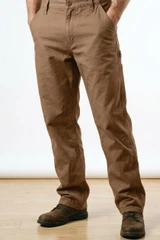
Protection Meets Practicality: Forge FR P-MFRP-5 Brown Canvas Work Pants
When working in environments with flame and arc hazards, having safety gear that is both certified a …21st Oct 2026 -
Stanco FRC1512 vs. Forge FR MFRJ-104: Which FR Stretch Jeans Belong on Your Crew?
Choosing the right flame-resistant (FR) work jeans for your crew comes down to balancing arc flash p …21st Oct 2026 -
Why Electricians and Line Workers Are Switching to Stanco™ FRC1512 Memory Stretch Jeans
For electricians, utility technicians, and linemen, mobility isn't just about comfort—it's a fundame …16th Oct 2026