From Bus Garages to Bistros: Why Every Public Space Needs a Biohazard Plan
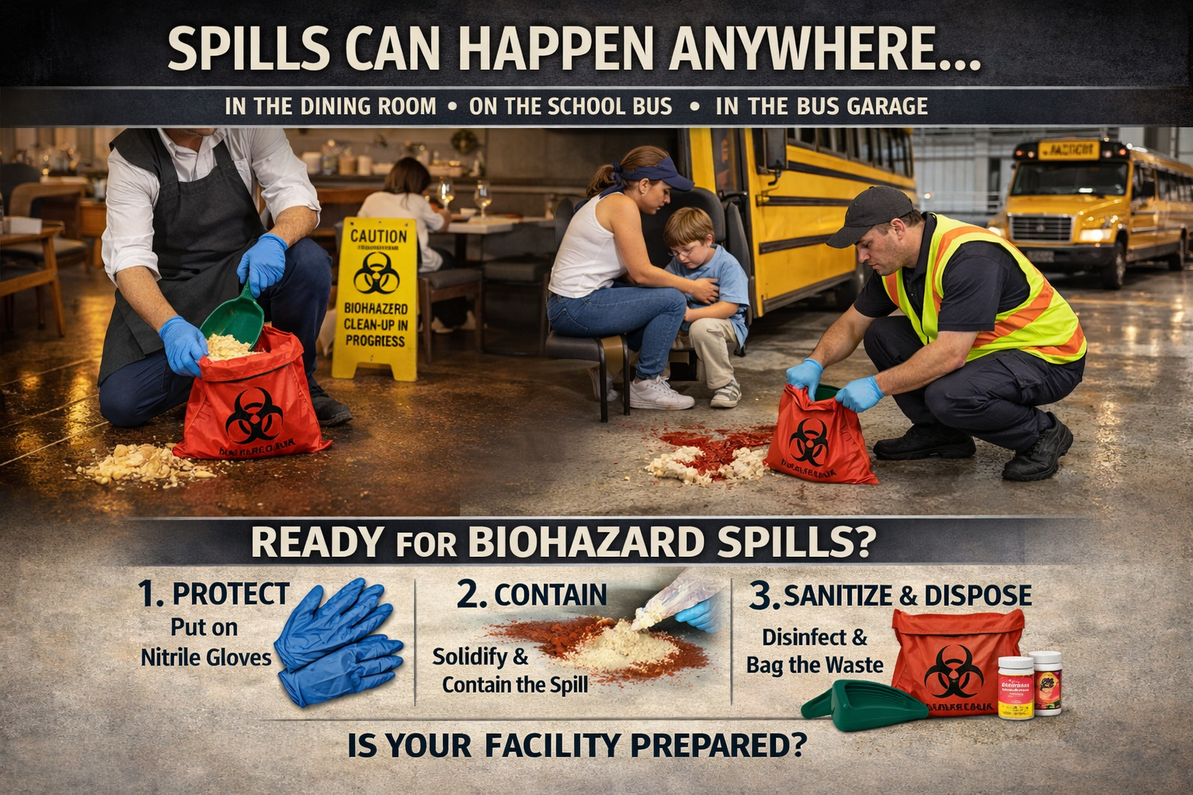
When we think of "spills," we often think of a knocked-over juice box or a leaked engine fluid. But as the saying goes, "Spills can happen anywhere—on the way to school, in the classroom, or even in bus garages." When that spill involves bodily fluids, the stakes change instantly. Whether you are managing a fleet of school buses or a high-end restaurant, a standard mop and bucket aren't just insufficient—they are dangerous.
The Restaurant Reality: Safety in the Dining Room
In the hospitality industry, a biohazard incident (like a sick guest or a kitchen injury) isn't just a safety issue—it’s a business-threatening event.
-
The Cross-Contamination Risk: Using the same cleaning tools for a biohazard that you use for your kitchen floors is a recipe for disaster.
-
Discreet and Professional: Our Body Fluid Disposal Kit allows your staff to respond quickly and professionally. Instead of a chaotic "clean-up on aisle five" scene, your team can use solidifying powder to lock in the spill and medical-grade wipes to disinfect the area, restoring the dining room with minimal disruption to other guests.
On the Move: Classrooms and Bus Garages
Education and transportation sectors face high volumes of people in confined spaces.
-
In the Bus Garage: Working with heavy machinery often leads to injuries. Having a kit on hand ensures that blood or other fluids are contained before they reach the drains or soak into the concrete.
-
On the Way to School: School buses are essentially mobile classrooms. A kit stored on the bus ensures the driver can manage a motion-sickness incident or a playground scrape safely until the vehicle can be properly deep-cleaned.
The Your Safety Company Three-Step Response
Our kit simplifies the complex world of biohazard compliance into three easy steps for your staff:
-
Protect: Put on the high-quality nitrile gloves immediately. Never touch a spill with bare hands.
-
Contain: Pour our solidifying powder over the liquid. Watch it turn into a gel, preventing splashes and stopping the spread.
-
Sanitize & Dispose: Use the included tools to scoop the gel into the red biohazard bag and use the disinfectant wipes to leave the surface sterile.
Don't Be Caught Unprepared
A biohazard spill is a "when," not an "if." Whether you’re serving 5-star meals or driving 50 students to school, ensure your team has the right tools to protect themselves and the public.
Is your facility ready for the unexpected?
Recent Posts
-
From Bus Garages to Bistros: Why Every Public Space Needs a Biohazard Plan
When we think of "spills," we often think of a knocked-over juice box or a leaked engine fluid. But …19th Mar 2026 -

The Satellite Safety Strategy: Why One Big Cabinet Isn’t Enough
Every facility has a "Safety Hub"—that impressive, 4-shelf industrial cabinet stocked with everythin …16th Mar 2026 -

Stop Digging: The Sterile, Stress-Free Way to Remove Splinters
Whether it’s a child at the park, a family lounging on a wooden deck, a tradesman on a busy job site …13th Mar 2026