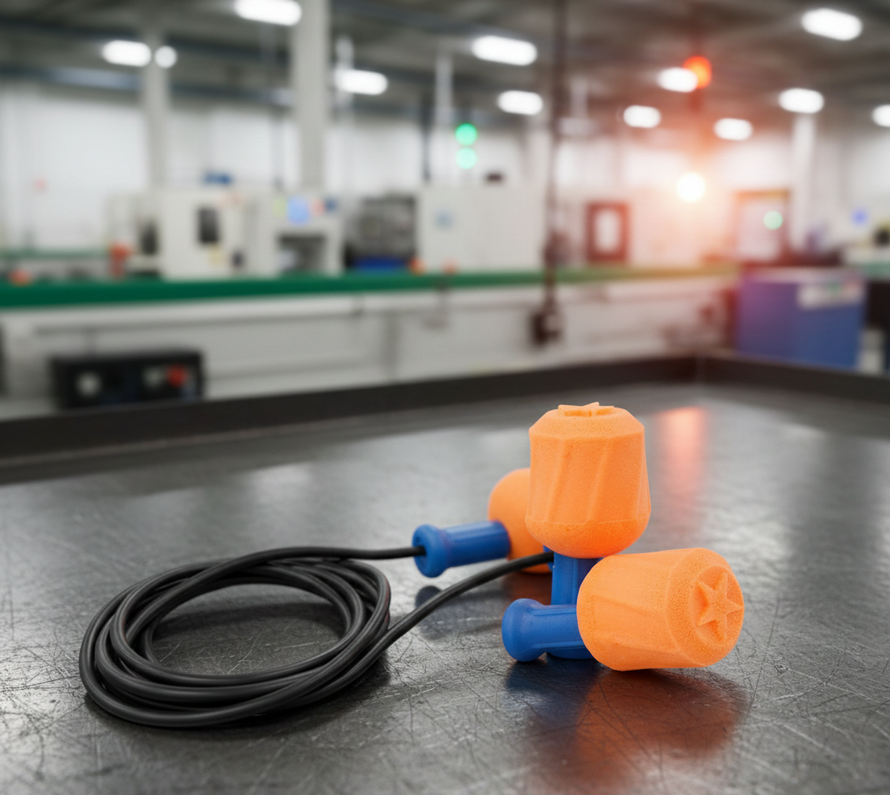
The Science of Silence: Why Your Ear Canal Shape Matters
Every ear canal is unique—shaped differently and sized differently. This is the biggest challenge for standard "one-size-fits-all" foam ear plugs. If a plug doesn't conform perfectly to your specific shape, you aren't getting the NRR 30 protection promised on the box.
Today, we’re diving into the engineering behind the PIP EZ-Twist™ and why "PowerSoft™" technology is more than just a marketing name.
The Anatomy of a Perfect Seal
Traditional foam plugs require you to roll them down, often creating creases or "folds" in the foam. These tiny channels allow sound waves to leak through, bypassing the protection entirely.
The EZ-Twist™ uses a different approach:
-
Controlled Expansion: The PowerSoft™ PU foam is engineered with a slower expansion rate. This gives the worker time to properly seat the plug before it creates its final seal.
-
The "Twist" Compression: By twisting the plug into place using the integrated stem, you are evenly distributing the foam against the ear canal walls. This eliminates the air gaps and creases that lead to noise leakage.
-
Low-Pressure Comfort: Some plugs "push back" too hard, causing ear fatigue after an hour. PowerSoft™ foam is designed to maintain a seal with minimal outward pressure, making them comfortable for a full 8-hour shift.
Why NRR 30 is the "Sweet Spot"
In industrial and electrical environments, noise levels often fluctuate. An NRR 30 rating provides a high level of protection that is suitable for heavy machinery, grinding, and the potential sound blast of an arc event.
However, that protection is only effective if the plug stays in.
-
Corded Security (267-HPF610C): For high-movement jobs, the cord ensures the weight of the plug doesn't pull it out of the ear, maintaining that critical seal.
-
Uncorded Simplicity (267-HPF610): For static environments or under-hood use, the uncorded version provides the same NRR 30 science without any external interference.
Protect Your Most Valuable Asset
Your hearing doesn't grow back. By choosing an ear plug that uses science to ensure a perfect fit every time, you are investing in a lifetime of clear hearing.
Recent Posts
-

The Eyewash Station: Your First Line of Defense in an Eye Emergency
In any workplace, safety should always be a top priority. When it comes to eye safety, every second …2nd Mar 2026 -

The Unsung Hero of Consistency: Why Your Team Trusts the Same Safety Supplies
Imagine trying to bake a cake with a different brand of flour, sugar, and eggs every time. The resul …27th Feb 2026 -

The Hidden Cost of "The Walk": Why Accessible Safety Supplies Matter
In a busy facility, time isn’t just money—it’s momentum. One of the most common "hidden costs" in pr …26th Feb 2026